AI Document Scrape & Generate
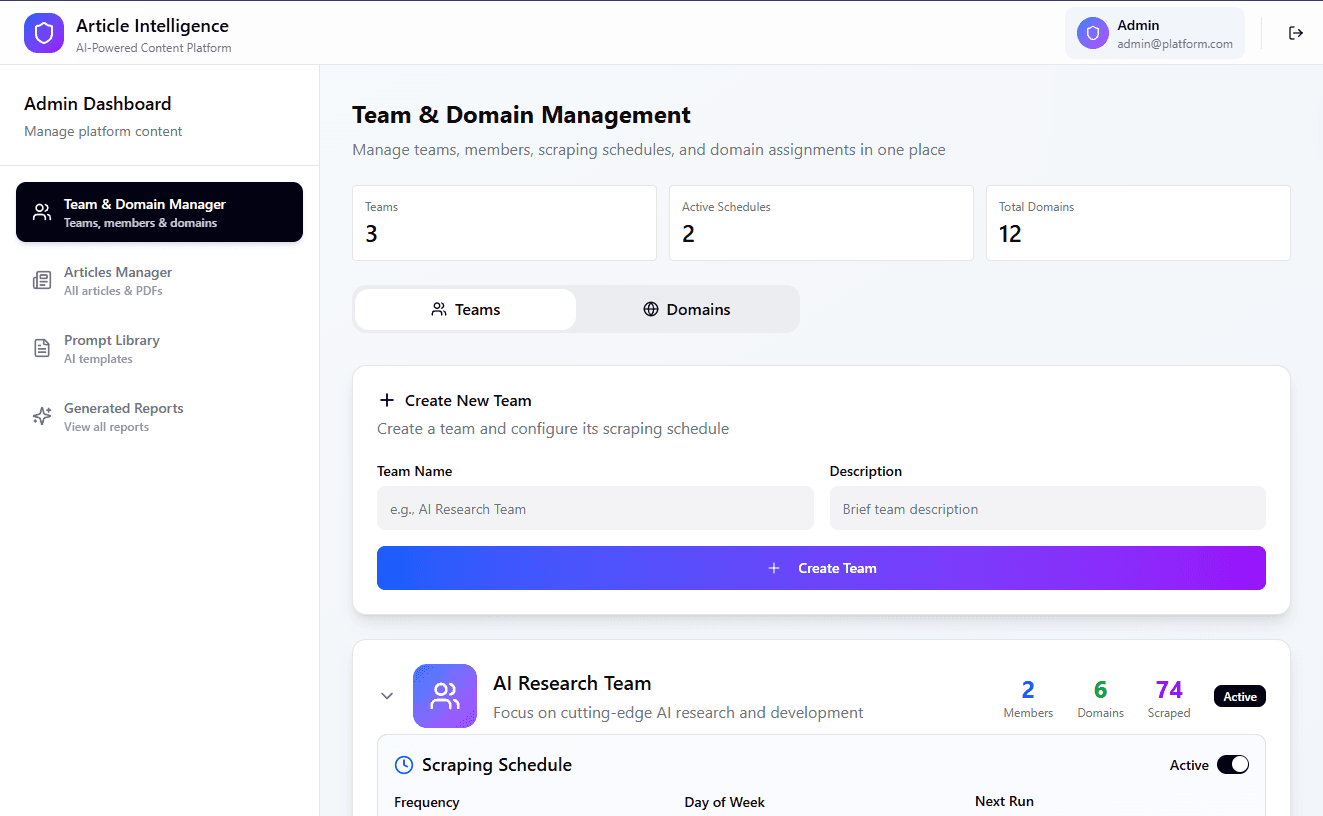
An AI-powered research tool for scraping selected websites, uploaded PDFs into clean HTML or PDF reports with templates.
TIMELINE
2024
PLATFORM
Mobile
UX/UI DESIGN
BACKGROUND
Research was scattered across too many places.
Teams were collecting articles, PDFs, and links manually, then summarizing and formatting them into reports by hand.
The problem was not only finding information. Teams also needed to verify whether sources were credible, confirm publish dates, check relevance, summarize content, and format outputs for stakeholders.
AI Research Tool was designed to bring these steps into one workflow: collect sources, scrape or upload content, review article previews, generate summaries, and export a polished report.
DESIGN PILLARS
Problems to solve.
The main challenge was to make NFC tag management feel less technical and more operational: structured enough to manage many tags, but simple enough for everyday users to understand at a glance.
🕹️
Simple Tag Setup
Made creating and assigning a tag feel guided, not overly technical.
📓
Editable Destinations
Allowed users to update what a tag points to without rethinking the whole setup.
🎮
Tag Collection Clarity
Made it easier to organize tags by status, type, use case, or location.
🧭
Clear Status Visibility
Helped users quickly see which tags were active, draft, disabled, or needed attention.
👤
Reliable Testing Flow
🔒
Flexible Use Cases
Supported personal, business, and operational tag workflows from one system.
MY ROLE
Designing a product system for tag creation, linking, and management.
UX FLOW
SOURCE INPUT
Designed the end-to-end workflow for scraping selected URLs, importing PDFs, reviewing source content, and generating outputs
Structured article previews so users could quickly check source, date, metadata, and relevance before including content
Created an AI-assisted summary flow that kept human review and editing at the center
Designed export patterns for HTML, PDF, and newsletter-style outputs
Focused on making automation feel trustworthy, traceable, and usable for enterprise research teams
RESEARCH
Understanding the current workflow.
The team already had reports, PDFs, trend updates, and newsletters, but the process was fragmented across SharePoint, Outlook, personal files, and team-specific workflows.
GAP
Research was scattered
Hard to find later
Repeated work
Context got lost
Slow and inconsistent